Once production starts, small issues stop feeling small. An edge that drifts, an opening that cuts inconsistently, or a panel that flexes more than expected can slow installation and create rework. Thermoformed automotive interior trim gets attention for exactly that reason. For the right applications, it gives OEMs and suppliers a practical way to produce larger formed parts with a tooling approach that fits real production needs.
Jamestown Plastics supports automotive programs with custom thermoformed solutions that include trim components, product assembly trays, returnable packaging, and other formed parts used throughout vehicle manufacturing. Heavy gauge thermoforming and robotic finishing stand out in interior trim work because they help address the issues that tend to show up later, once a part must repeat at scale and fit the same way every time.
When Interior Trim Gets More Demanding
Automotive interior trim covers more than cosmetic surfaces. Depending on the application, it may include closeout panels, cargo area liners, trunk trim, shrouds, protective covers, and other custom vehicle interior panels shaped for a specific platform. Some of those parts are visible and need a finished appearance. Others serve a more functional role, protecting nearby components or closing off open space within the vehicle.
Larger interior parts usually bring added complexity. Part geometry may be broad and shallow in one area, then tighter and more detailed in another. A panel may need to clear hardware, align with adjacent structures, and stay stable during installation. Problems tied to fit or trim do not stay isolated for long in an automotive program. They carry forward into assembly.
Plastic car parts manufacturing includes several processes, and each one has its place. Thermoforming tends to make the most sense when the application involves larger formed parts, practical production volumes, and a need for repeatable finishing without overcomplicating the path to production.
Where Heavy Gauge Fits
Heavy-gauge automotive thermoforming comes into the picture when the part needs more structure, more durability, or simply more physical presence. Cargo panels, utility vehicle liners, closeout pieces, and protective interior covers often fall into that category.
A heavier starting sheet can help a part keep its shape during handling and installation. It can also support applications where wear, impact, or repeated contact are part of normal use. Interior parts in commercial vehicles, fleet vehicles, and cargo-focused designs often face those conditions every day.
Heavy gauge is not the answer for every interior component. Still, many larger parts benefit from the extra rigidity it can provide. Jamestown Plastics already positions heavy gauge thermoforming as one of its core capabilities, which makes it relevant for automotive manufacturers sourcing formed interior parts that need to do more than simply fill space.
Why Robotic Finishing Matters for Tier 1 Suppliers
Forming the part is only half the job. Cut quality has a direct effect on fit, appearance, and how smoothly the component moves into assembly.
For Tier 1 suppliers, that pressure is immediate. Parts need to arrive ready for installation, with repeatable edges, clean openings, and predictable dimensions across production runs. A part that varies even slightly can create a larger problem once it reaches the line.
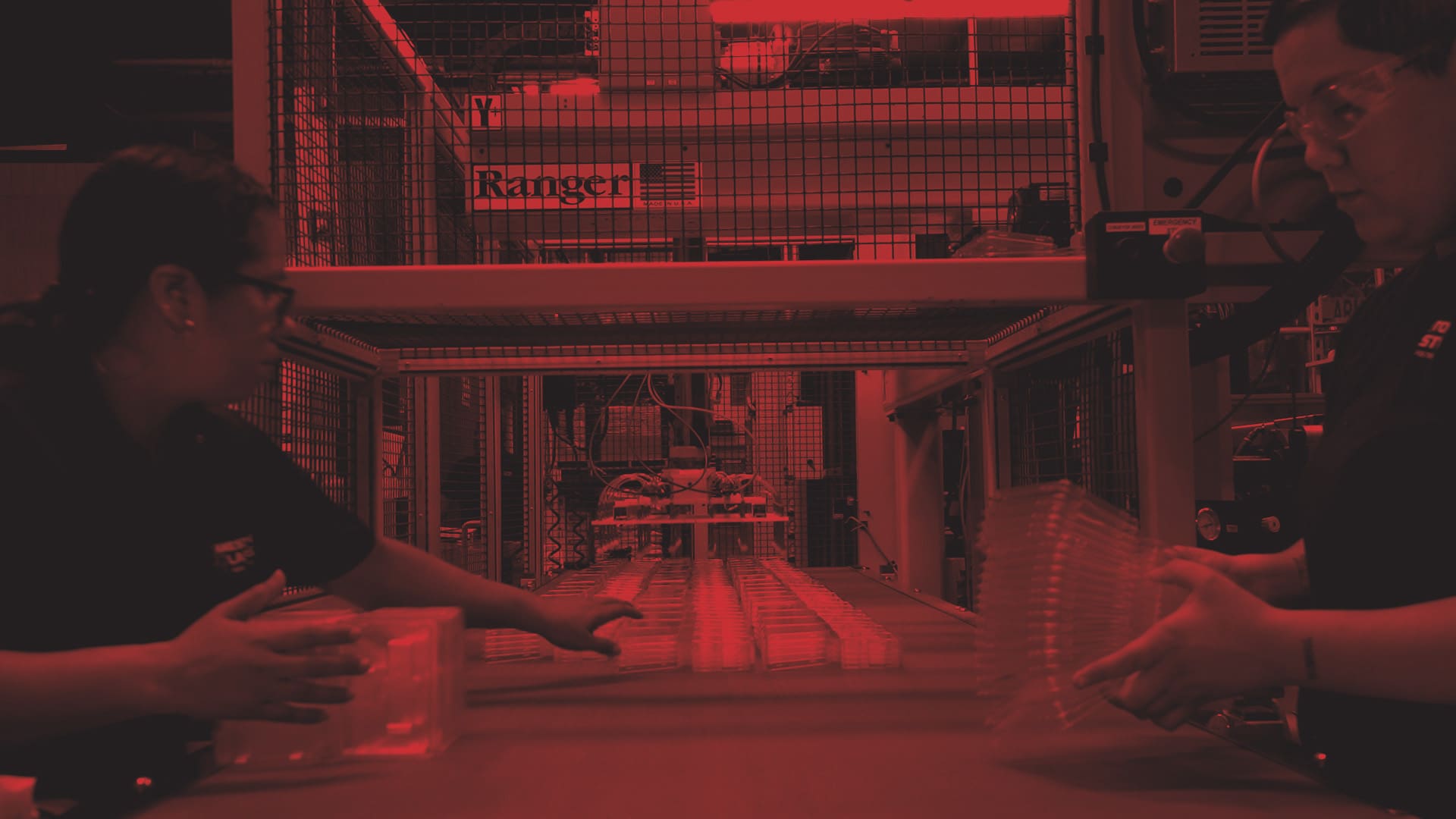
Robotic finishing helps tighten up that side of the process. Jamestown Plastics uses robotic automation with router, water jet, and laser technologies to support consistent trimming and cleaner results. In interior trim programs, that kind of control is especially important when the part includes cutouts, mounting features, or edge details that must line up the same way every time.
Design Decisions Still Shape the Outcome
A part may look straightforward in CAD and still become difficult to manufacture if early decisions are off. Interior trim programs depend on more than the formed shape alone. Material selection, trim strategy, wall distribution, and access for finishing all affect how the part behaves once production begins.
Some parts need a higher-quality appearance. Others need to take abuse in service or stay rigid during repeated handling. Surface finish may drive one program. Structural performance may drive another. Good results usually come from working through those priorities early, before tooling is locked in and production issues become harder to correct.
Jamestown Plastics handles design and tooling in-house, which helps keep those discussions connected. Engineering choices and manufacturing realities stay closer together when the same team is looking at both.
Interior Trim Is Only Part of the Program
Interior trim may be the main focus, but many automotive manufacturers also need support with the parts that move through production. Automotive component trays, returnable trays, and dunnage systems help protect subassemblies, improve handling, and keep work organized on the floor.
That overlap matters more than it might seem at first. A supplier that understands both formed vehicle components and thermoformed packaging can often support a program more effectively across its full workflow. Jamestown Plastics already includes interior and exterior trim components, returnable trays, pallet solutions, and product assembly trays within its automotive offering, which makes that broader support relevant for customers looking to simplify sourcing.
Built for Interior Programs That Need Consistency
Thermoformed automotive interior trim can be a strong fit for larger vehicle components that need durable performance, clean finishing, and repeatable production. Heavy-gauge automotive capabilities support the structural side of those applications. Robotic finishing supports the precision side, which becomes especially important for Tier 1 suppliers working in tighter production environments.
Jamestown Plastics works with automotive customers on custom vehicle interior panels, automotive component trays, and other formed solutions used across modern vehicle programs. Companies evaluating a new interior trim application can explore our Automotive Industry page and contact our team to discuss project requirements, part geometry, and production goals.